


If you’ve ever stood in a Karachi vegetable market watching prices climb week after week, or looked at a bag of spinach in Lahore and wondered how many hands it passed through before reaching you, you’ve already got the main reason to start a kitchen garden. It isn’t a trend. It’s the most sensible response to what’s happening in our kitchens right now — rising costs, questionable quality, and a growing desire to know exactly what’s on our plate.
The good news is that you don’t need a farmhouse in Bedian or a lawn the size of a cricket pitch. A sunny balcony in DHA, a rooftop in Model Town, or even a row of pots outside your kitchen door in Hyderabad is enough to get started. This guide walks you through everything — from picking a spot to harvesting your first bhindi — the way I’d explain it to a neighbour, not a textbook.
Why Bother With a Kitchen Garden?
Before the how-to, it’s worth being honest about the why, because that’s what keeps people going past the first two weeks. 
It saves real money. Herbs like coriander and mint, which you buy in tiny bunches almost daily, cost next to nothing to grow and keep producing for months.
It’s the only way to be sure what’s not on your food. Open markets in Pakistan aren’t always regulated the way we’d like, and even “organic” labels at some stores are more marketing than method. When you grow it yourself, you control every input.
It’s genuinely good for your evenings. Ten minutes of watering plants after Maghrib does something for the mind that scrolling your phone never will. Most gardeners will tell you this is the reason they stayed with it long after the savings stopped mattering.
Step 1: Pick Your Spot Honestly
Most vegetables need 4 to 6 hours of direct sunlight a day. This is the single biggest reason first-time kitchen gardens fail — people plant in a shaded corner because it looks tidy, and then wonder why the plants stay small and pale.
Walk around your house at different times of day and actually watch where the sun falls:
- Rooftop or terrace — usually the best option in Pakistani homes; full sun most of the day
- Balcony — works well if it faces south or west and isn’t blocked by an adjacent building
- Ground-floor courtyard or “sehan” — fine as long as boundary walls aren’t casting shade for most of the day
- Windowsill — enough for herbs like mint and coriander, not enough for fruiting vegetables like tomatoes.
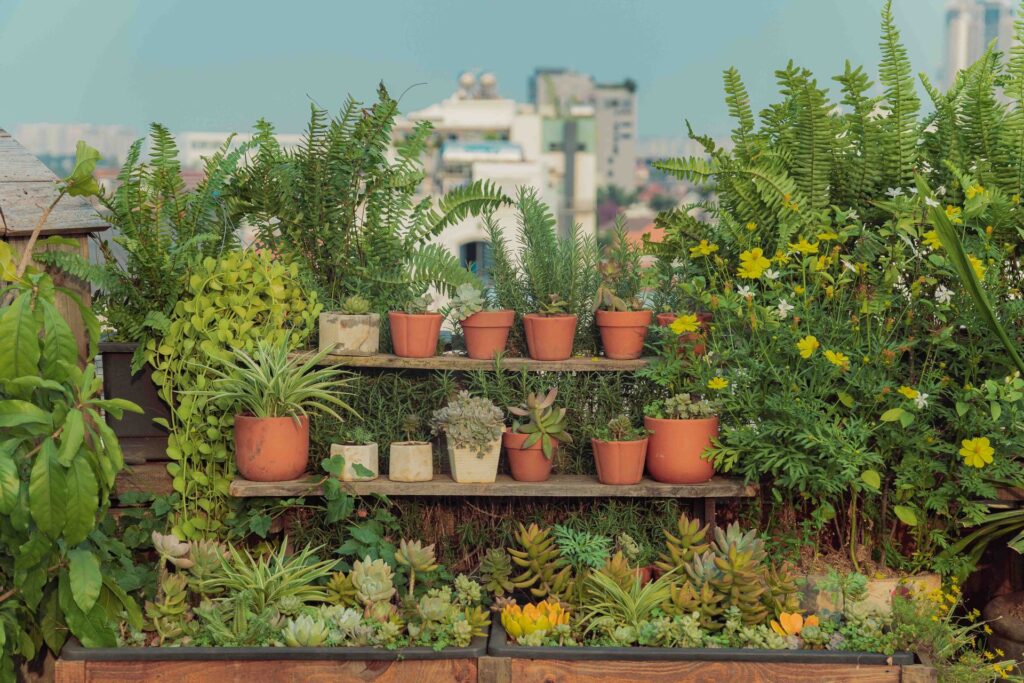
If your only sunny spot is a rooftop with no shade at all, don’t worry — that’s actually the easier problem to solve. A simple shade net for peak summer afternoons costs very little and protects tender seedlings without cutting off the light they need.
Step 2: Choose Your Containers
You do not need to buy anything expensive to begin. In fact, one of the most Pakistani things about kitchen gardening is how much of it runs on reused containers — old cooking oil tins, buckets with drilled holes, even worn-out paint drums cut in half.
That said, once you’re past the experimental phase, it’s worth comparing your real options:
| Container | Best for | Notes |
| Reused tins/buckets | Beginners, zero budget | Drill 3–4 drainage holes in the base |
| Grow bags | Tomatoes, chilies, eggplant | Lightweight, good drainage, easy to move for sun |
| Plastic pots | Herbs, small vegetables | Widely available, inexpensive, reusable for years |
| Raised beds | Larger rooftops/courtyards | Best yields, but needs more soil volume and upfront cost |
If you’re not sure which to start with, grow bags are the most forgiving option for Pakistan’s climate — they drain well, which matters a lot once the monsoon humidity sets in, and they’re easy to shift into shade during the worst of the summer heat.
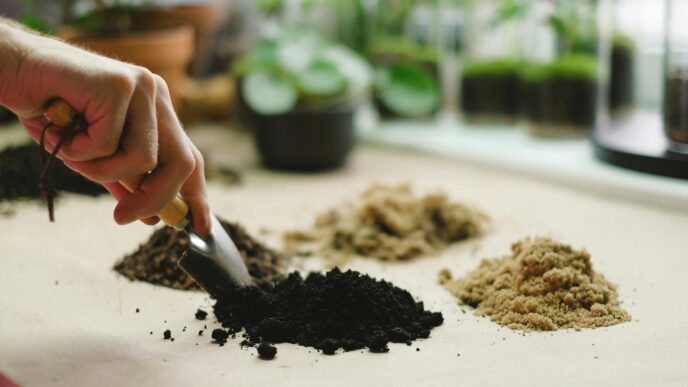
Step 3: Get the Soil Right
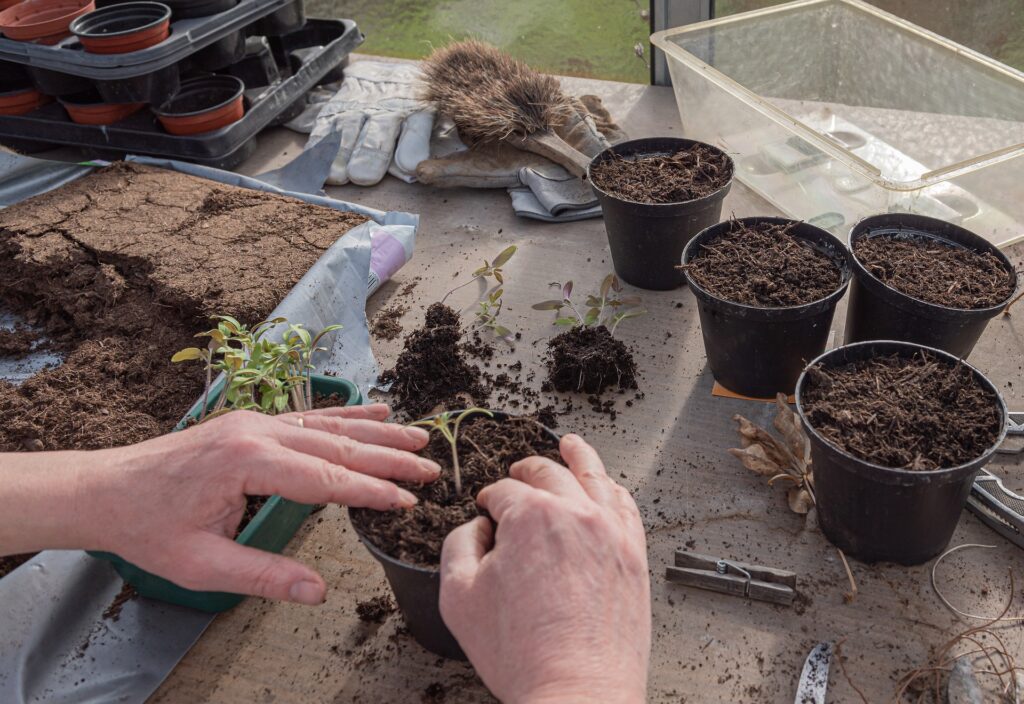
This is the step people rush through, and it’s the one that actually determines whether your garden thrives or limps along all season.
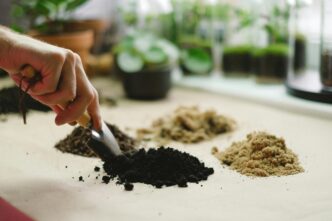
A reliable basic mix for containers:
- 2 parts local garden soil
- 1 part compost or well-rotted farmyard manure (available cheaply from most nurseries)
- 1 part coarse sand or rice husk for drainage
If that sounds like too much measuring, the simpler rule is this: your soil should never turn into a solid block after watering, and it should never dry into dust within a day either. If it does either, adjust with more compost (for dust) or more sand (for waterlogging).
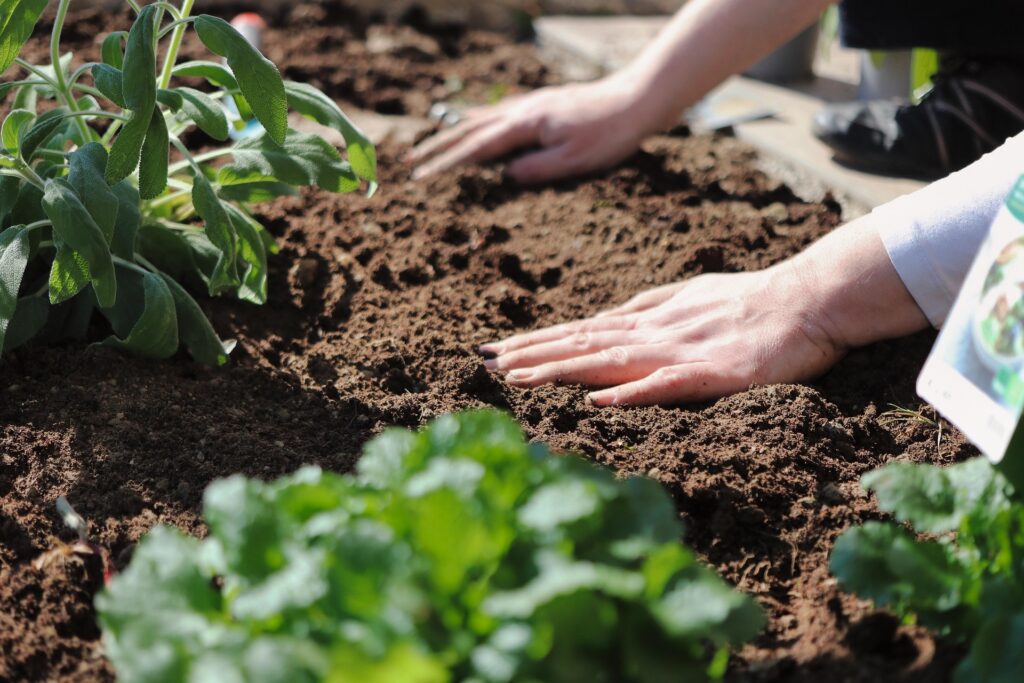
Don’t skip the compost. Vegetables are hungry plants, and container soil runs out of nutrients far faster than garden soil in open ground.
Step 4: Know Your Seasons
This is where a lot of well-meaning first-time gardeners in Pakistan lose their crop — they plant summer vegetables in October, or try to grow spinach in June, and then blame themselves when it doesn’t work. It’s the calendar, not the gardener.
Kharif season (roughly March–September): okra (bhindi), cucumber, tomato, eggplant (baingan), bottle gourd (loki), chilies
Rabi season (roughly October–February): spinach (palak), coriander, radish, carrot, fenugreek (methi), peas, cauliflower
If you’re starting today, check which season you’re actually in and choose from that list — don’t fight the calendar on your first attempt. Success in month one is what keeps you gardening in month six.
Step 5: Start With Vegetables That Forgive Mistakes
Everyone wants to start with tomatoes because they’re the most rewarding to eat, but they’re not the most forgiving to grow. For your very first round, I’d suggest a mix like this:
- Spinach or coriander — fast, nearly foolproof, ready in 3–4 weeks
- Radish — one of the quickest vegetables you can grow, done in under a month
- Mint — plant once, and it will spread on its own for years
- Okra (bhindi) — thrives in Pakistan’s heat and is genuinely hard to kill once established
- Chilies — a single healthy plant can supply a household for months
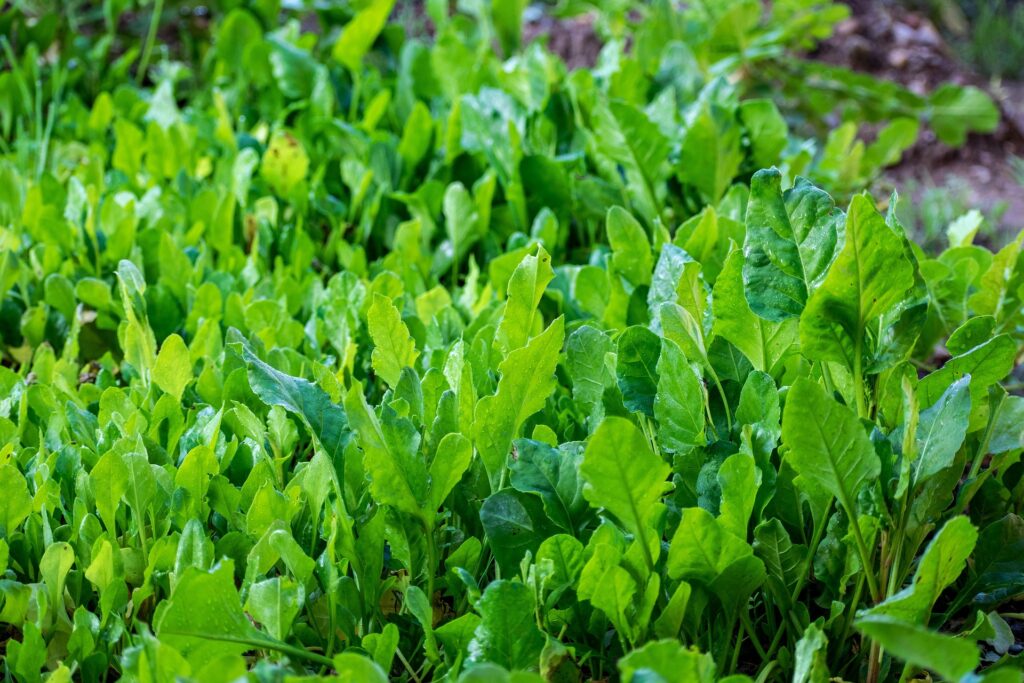
Once these succeed and you understand your own watering rhythm and sunlight, move on to tomatoes, cucumbers, and anything else you like eating.
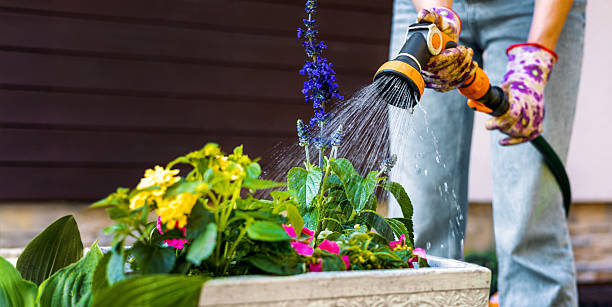
Step 6: Water Like the Season, Not the Clock
A common mistake is watering on a fixed schedule regardless of weather. Think of it more like how your own thirst changes — you drink more in June than in January, and your plants work the same way.
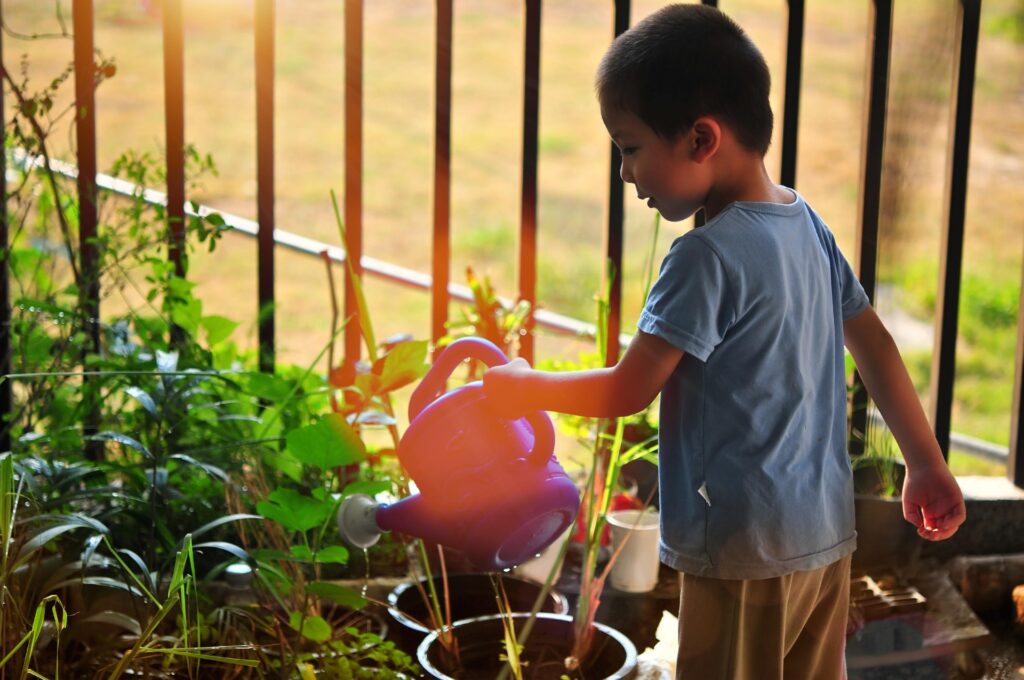
As a general guide:
- Summer: once daily, sometimes twice if pots are small and the heat is severe
- Winter: two to three times a week is usually enough
- Always check the soil an inch below the surface before watering — if it’s still moist, wait
Overwatering kills more container vegetables in Pakistan than underwatering does, mainly because containers without proper drainage holes turn into swamps during monsoon season. Check your drainage holes before you check your watering can.
Step 7: Deal With Pests the Organic Way
The most common visitors to a Pakistani kitchen garden are aphids, whiteflies, and the odd caterpillar. You don’t need harsh chemicals for any of them, especially since you’re growing this food to eat.
- Neem oil spray — mix a small amount with water and a drop of dish soap, spray weekly
- Garlic-chili solution — blend garlic and hot chilies with water, strain, and spray on affected leaves
- Soap water spray — a mild dish soap solution suffocates soft-bodied pests like aphids
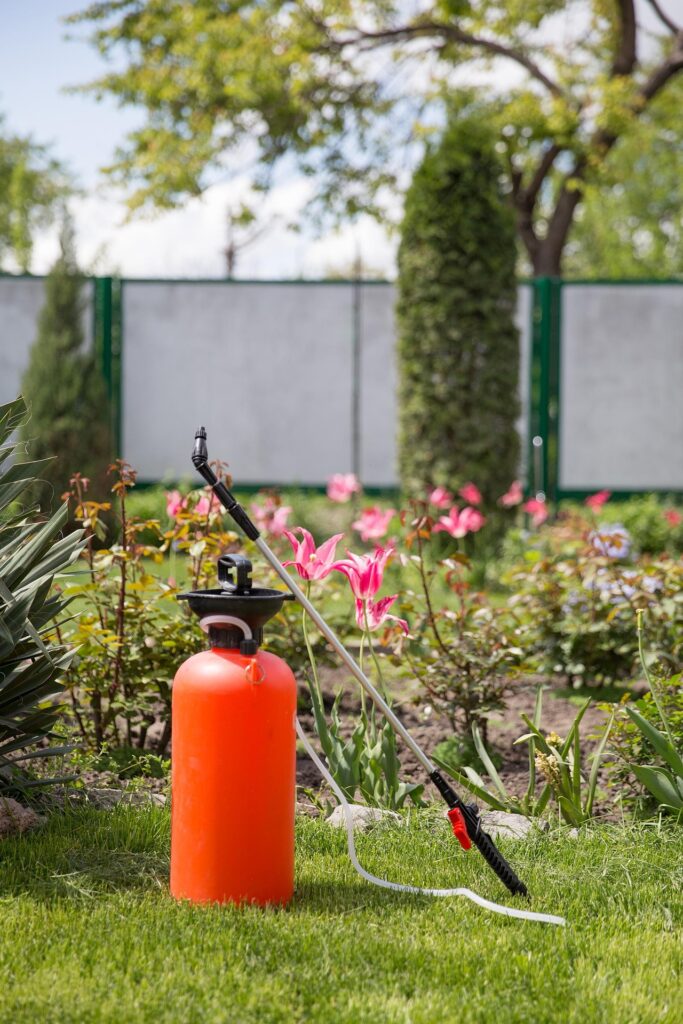
Check your plants every couple of days rather than waiting for a full-blown infestation — catching pests early is the difference between a quick spray and losing the whole plant.
Common Mistakes to Avoid
- Planting in too much shade because it looks neater — vegetables need the sun, not tidiness
- Ignoring drainage holes — a waterlogged pot is a dead pot, especially in monsoon season
- Overcrowding pots — one tomato plant per large container, not three squeezed in together
- Fighting the season — plant what belongs in the current season, not what you saw online from a cooler climate
- Giving up after one failed batch — even experienced gardeners lose plants; it’s part of learning your specific balcony or rooftop’s conditions
Frequently Asked Questions
Can I start a kitchen garden with no yard at all? Yes. Balcony and terrace gardening using pots and grow bags works perfectly well, as long as you get 4–6 hours of direct sunlight somewhere on your property.
Do I need expensive soil or fertilizer to begin? No. You can start with reused containers, local soil, and homemade compost at very low cost. Focus on drainage and sunlight first — those matter more than premium products.
How often should I water in Pakistan’s climate? Usually once daily in summer and two to three times a week in winter, depending on how quickly your particular soil mix dries out.
Is homegrown produce actually safer than market produce? Growing at home gives you full control over what touches your food — no unknown pesticides, no uncertainty about handling. For families with children or elderly members, that alone is worth the effort.
Where to Go From Here
Starting is genuinely the hardest part — once your first coriander patch comes up, the rest gets easier because you’ll finally trust your own instincts about your specific space. Pick one sunny spot, one or two forgiving vegetables from the list above, and give it three weeks before judging the results.
If you’d rather skip the trial-and-error phase, we’ve put together seed and starter plant bundles suited to Pakistan’s current growing season — take a look at our shop for everything you need to get your first containers going. And if you’re thinking bigger than a few pots — a full rooftop garden, a proper kitchen garden layout, or a courtyard redesign — that’s exactly the kind of project our consultancy team can help you plan from the ground up.
Either way, the best time to start was the last growing season. The second-best time is this weekend.