

If you’ve ever walked through a mature orchard in Renala Khurd or driven past the citrus belt around Sargodha, you know there’s something almost magical about seeing a tree loaded with fruit that you can trace back to a single seed or graft. As someone who has spent the last five years studying and working with fruit trees across Punjab’s varying microclimates, I can tell you that Lahore — despite its concrete sprawl and dusty summers — is actually one of the more forgiving cities in Pakistan for home fruit growing, if you choose the right species and understand what our climate actually demands from a plant.
This article isn’t a generic “top 10 fruits” list copied from a gardening app. It’s built from real observations of what survives Lahore’s brutal 45°C+ June heat, what tolerates our winter fog belt (yes, that thick December-January fog does real physiological damage to certain trees), and what actually fruits reliably in our alkaline, clay-heavy soils. Let’s get into it.
Understanding Lahore’s Climate Before You Plant Anything
Before picking a tree, you need to understand three things about Lahore that most generic gardening advice completely ignores: 
1. Our winter isn’t “cold” — it’s foggy and humid. Lahore rarely drops below 4-5°C, but the December-January fog (locally we just call it “dhund”) creates prolonged periods of high humidity and low sunlight. This matters because it increases fungal disease pressure on stone fruits far more than the actual temperature does.
2. Our soil is naturally alkaline (pH 7.5-8.5). This is why citrus trees in Lahore often show yellowing between leaf veins (iron chlorosis) even when watered properly — it’s not a watering problem, it’s an iron-lockout problem caused by soil pH, and most people misdiagnose it.
3. Chill hours are limited but not zero. Lahore gets roughly 200-400 chill hours (hours below 7°C) during a normal winter. This is enough for low-chill peach and plum varieties, but not enough for apples or cherries, no matter what a YouTube video from California tells you.
With that context, here are the fruit trees I genuinely recommend for Lahore homes and small farms.
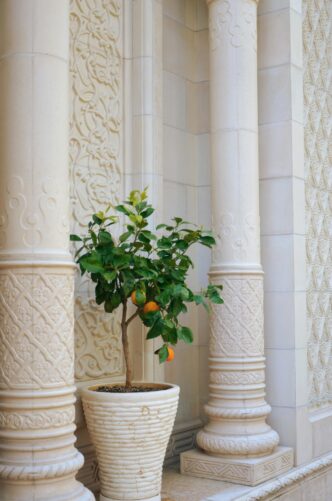
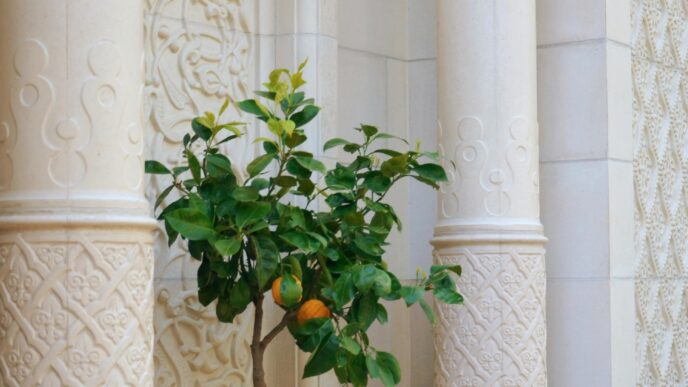
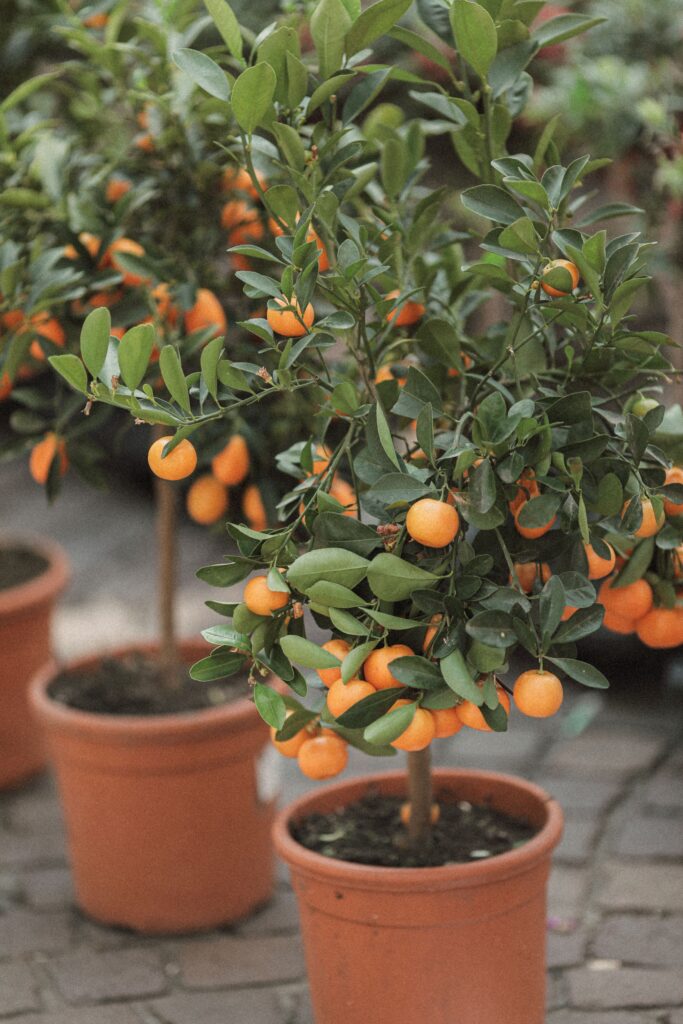
1. Kinnow (Citrus reticulata hybrid) — The Punjab Signature Crop
You cannot talk about fruit trees in this region without starting here. Kinnow isn’t just suited to our climate — Punjab’s citrus belt (Sargodha, Toba Tek Singh, and the outskirts of Lahore) essentially defines the crop globally.
Why it works here: Kinnow needs hot summers to develop sugar and cool (not cold) winters to develop that characteristic deep orange rind and easy-peel quality. Lahore delivers both.
What most sources won’t tell you: Kinnow trees planted on Rough Lemon rootstock perform noticeably better in Lahore’s heavier clay soils than those on Karna Khatta rootstock, which is more suited to sandier soils further south in Punjab. If your nursery doesn’t know which rootstock they’re selling you, that’s a red flag — ask specifically.
Practical tips:
- Plant in February-March or August-September (avoid peak summer transplanting)
- Space at least 15-18 feet apart — Kinnow canopies get wide
- Watch for citrus leaf miner in new spring flush; it’s cosmetic but weakens young trees if severe
- First real harvest: Year 3-4
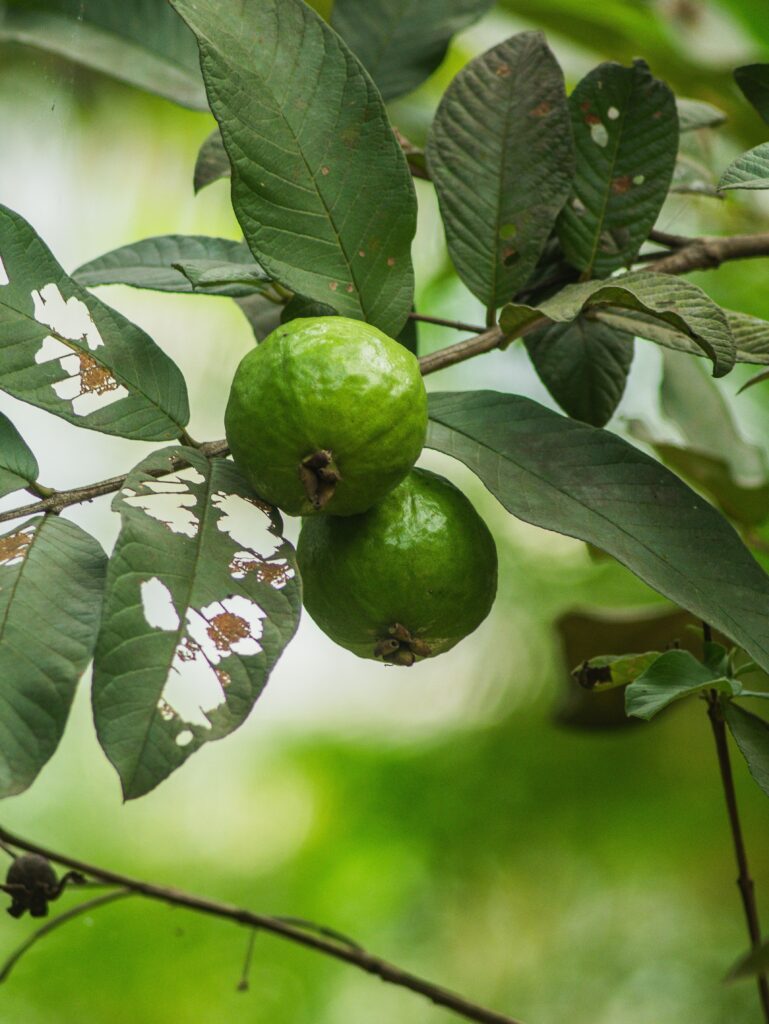
2. Guava (Amrood) — The Underrated Workhorse
If I had to recommend just one fruit tree to a first-time grower in Lahore, it would be guava. It tolerates our alkaline soil without complaint, survives on far less water than citrus, and starts fruiting in as little as 18-24 months.
Variety to look for: Allahabad Safeda and the local “Sufeda” strains do best. Some nurseries in Lahore now also sell Thai pink-flesh guava grafts, which have gained popularity for taste but are slightly more sensitive to our winter fog-related fruit fly pressure.
The real challenge in Lahore isn’t growing guava — it’s fruit fly. Punjab’s guava fruit fly (Bactrocera species) is one of the most underreported problems local growers face, and it’s rarely covered properly online. Bagging individual fruits with simple paper or cloth bags once they’re marble-sized is the single most effective home-garden solution — more reliable than most sprays, and it’s what commercial Sargodha orchards increasingly use for premium fruit.
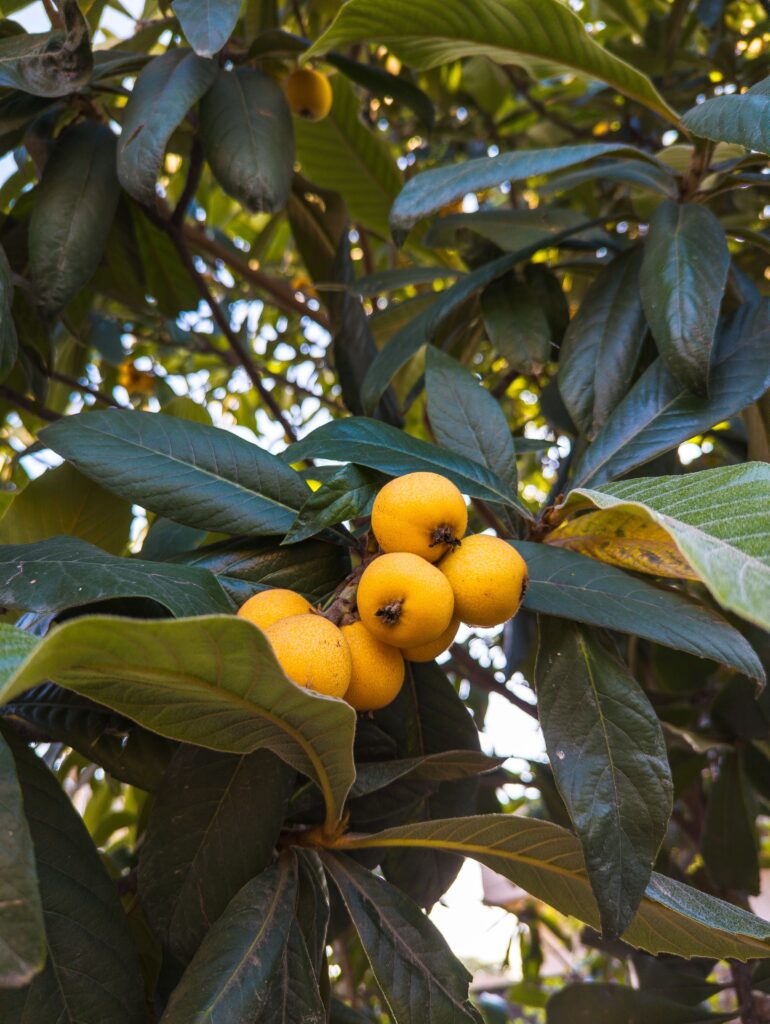
3. Loquat (Lokat) — Lahore’s Best-Kept Secret
Loquat is criminally underused in home gardens here, and I genuinely don’t understand why. It’s one of the few fruit trees that actually fruits during our mild winter-into-spring window (February-March), when almost nothing else in the garden is producing.
It tolerates Lahore’s alkaline soil, needs minimal spraying, and is remarkably drought-tolerant once established. The main issue people run into is impatience — loquat takes 3-5 years to fruit from a seedling, but grafted nursery plants (available at Lahore’s Baghbanpura and Ferozepur Road nurseries) can fruit in year 2.
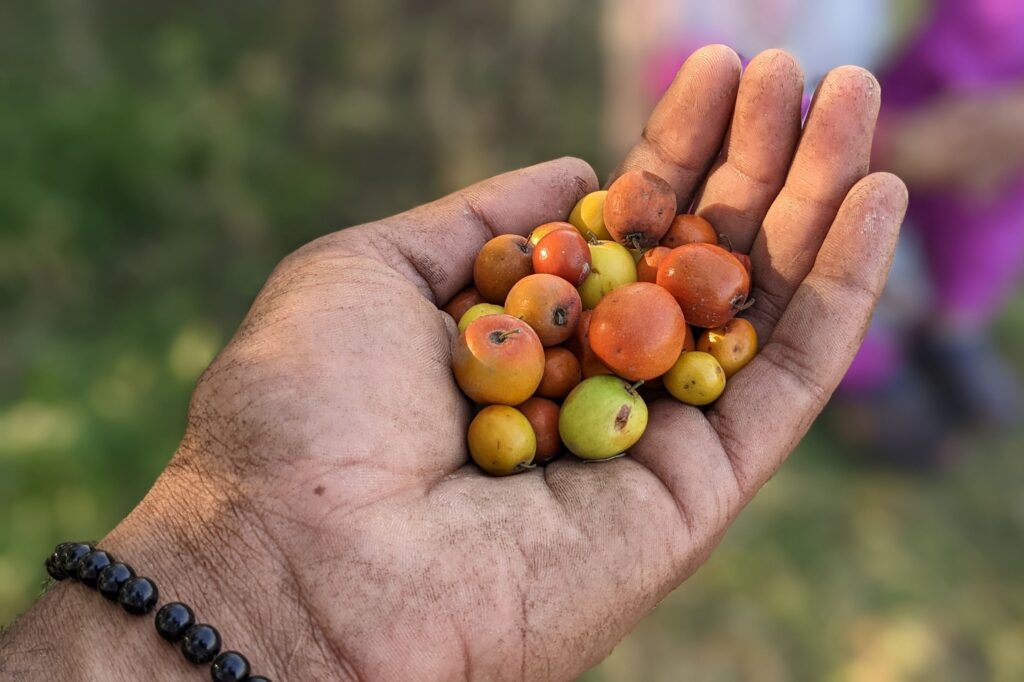
4. Ber / Indian Jujube (Zizyphus mauritiana) — The Toughest Tree You’ll Ever Grow
If your garden gets full sun and you tend to forget to water things, Ber is your answer. It’s essentially indestructible in Lahore’s climate, fruits heavily by year 2-3, and the improved varieties (Gola, Umran, Seb) produce fruit the size of a small apple rather than the small wild ber most people picture.
A tip rarely mentioned elsewhere: Ber trees actually benefit from a hard pruning every winter after harvest. Unpruned trees become overly vegetative and reduce fruiting the following year — this is one of the most common mistakes I see in Lahore home gardens.
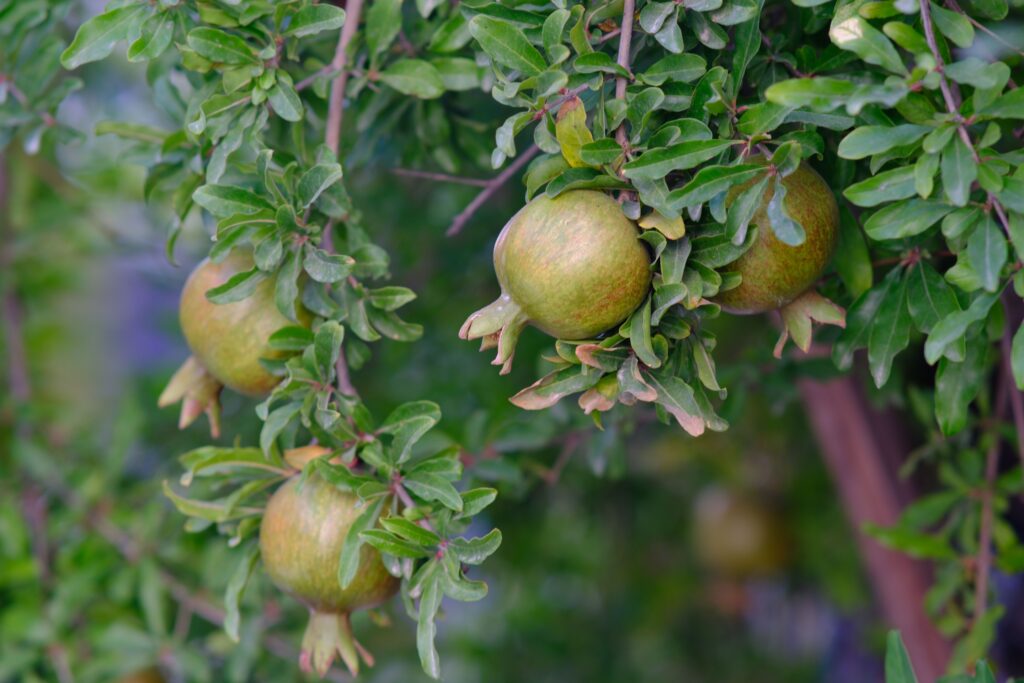
5. Pomegranate (Anar) — Kandhari Variety
Pomegranate genuinely loves Lahore’s hot, dry summer stretches (May-June before monsoon) and our alkaline soil doesn’t bother it at all. The Kandhari variety, widely available from nurseries around Lahore, is the most reliable for taste and disease resistance.
The one thing that trips people up: fruit cracking after sudden rain following a dry spell (very common in our July monsoon pattern). Mulching around the base to keep soil moisture more consistent reduces this significantly — most articles blame “variety” when it’s actually a soil-moisture management issue.
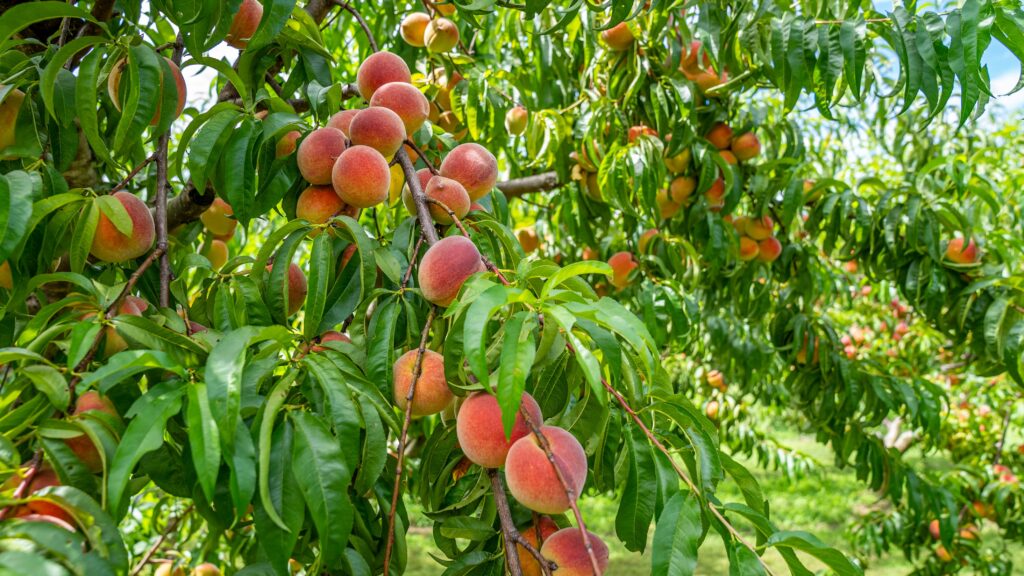
6. Low-Chill Peach and Plum Varieties
This is where local knowledge really matters, because generic advice fails badly here. Standard peach and plum varieties need 600-1000+ chill hours — Lahore simply doesn’t get that. But low-chill cultivars developed specifically for Punjab conditions (Florida-origin low-chill peach varieties adapted through Ayub Agricultural Research Institute, Faisalabad) can fruit successfully with our 200-400 hours.
Ask specifically for “low-chill” grafted stock — an unlabeled peach sapling from a random roadside nursery is a gamble in Lahore and often simply won’t flower properly.
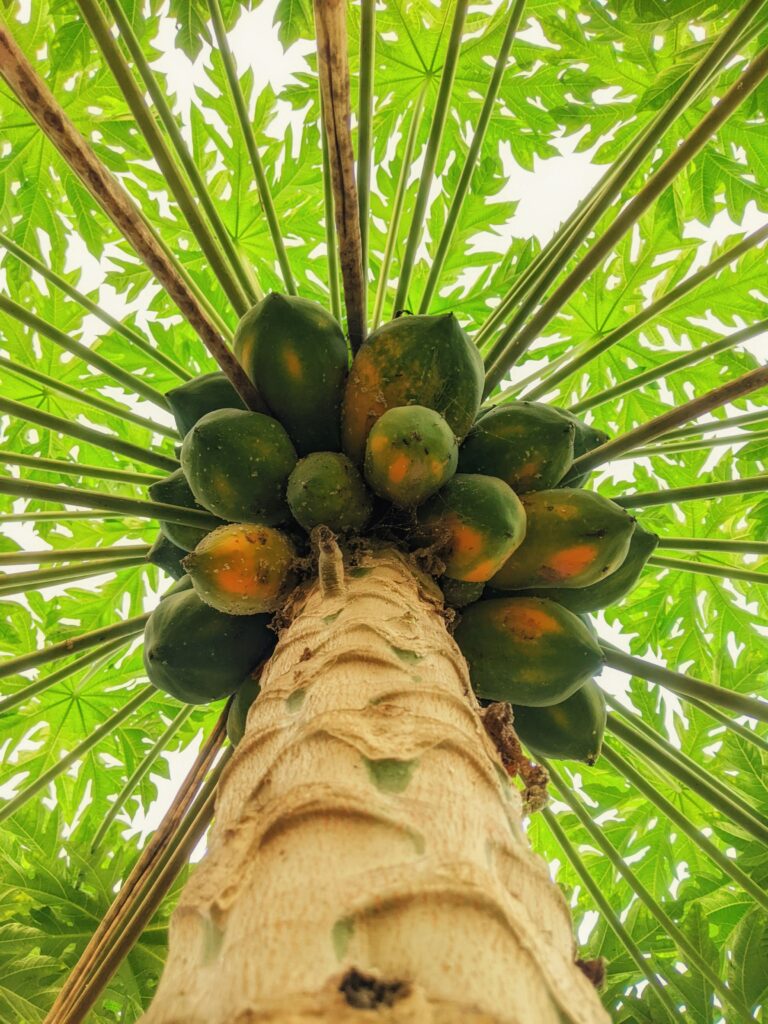
7. Papaya (Papita) — Fast Gratification
Papaya isn’t technically a “tree” botanically, but for home gardening purposes it behaves like one and deserves inclusion because it’s the fastest route to home-grown fruit in Lahore — often fruiting within 9-12 months of planting.
The catch: papaya is genuinely frost-sensitive, and while Lahore rarely gets true frost, the occasional cold snap in late December can damage or kill young papaya plants. Planting near a south-facing wall that retains heat overnight solves this problem almost entirely — a trick used by home growers in older Lahore neighborhoods like Model Town and Gulberg for decades.
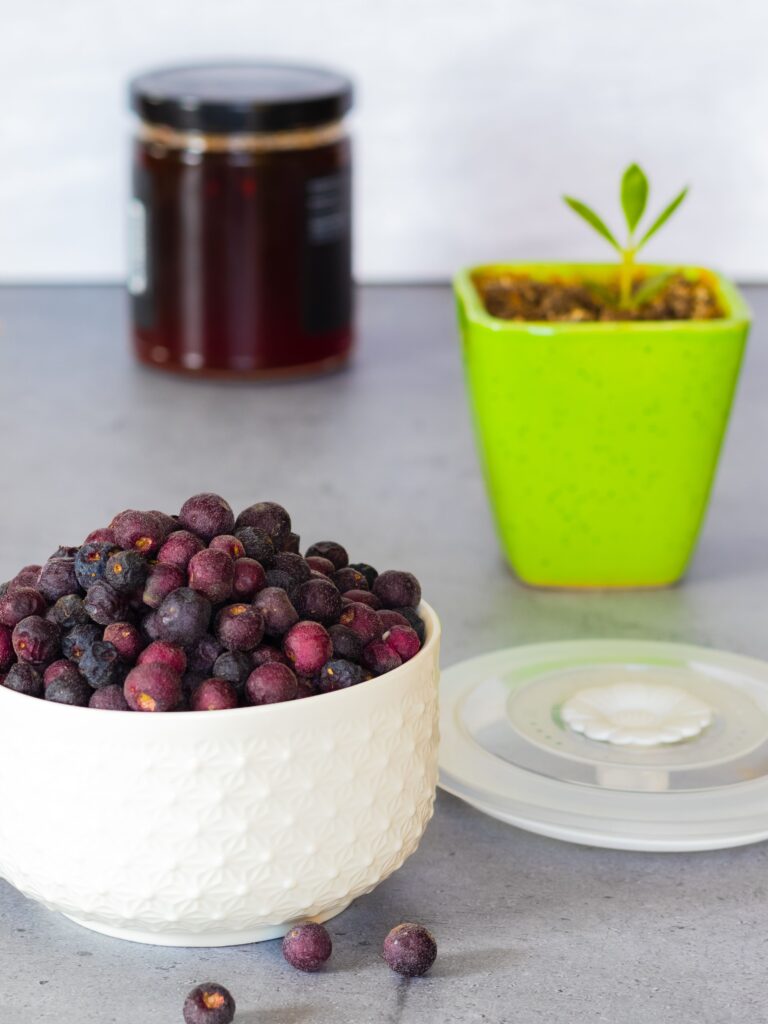
8. Falsa (Grewia asiatica) — The Summer Cooler
Falsa deserves more attention than it gets. It’s a shrub-tree that thrives in Lahore’s heat, requires very little space, and produces its tart purple berries right in peak summer (May-June) — precisely when demand for cooling, hydrating fruit (falsa sherbet is a Punjab summer staple) is highest.
Soil Preparation Advice Specific to Lahore
Given our alkaline clay soil, I recommend every new fruit tree planting hole (roughly 3×3 feet) be amended with well-rotted farmyard manure, a handful of gypsum (to help break clay compaction over time), and where budget allows, a small amount of elemental sulfur to gradually reduce localized soil pH around citrus and guava roots specifically — this single step prevents most of the iron chlorosis issues that frustrate new growers in their second year.
Final Thoughts
Growing fruit trees in Lahore isn’t about fighting the climate — it’s about working with what this land has actually proven itself good at for generations. Kinnow, guava, ber, and pomegranate aren’t popular in Punjab by accident; they’re popular because they thrive here with minimal intervention. Start with one or two of these, get to know how your specific patch of soil and sun behaves, and expand from there. There’s a genuine, quiet satisfaction in handing your family a plate of fruit you grew yourself — and in a city like Lahore, where green space is shrinking every year, every fruit tree you plant is a small act of reclaiming that.
Frequently Asked Questions (FAQs)
Q1: Which fruit tree gives fruit fastest in Lahore’s climate?
Papaya is the fastest, often fruiting within 9-12 months. Among true trees, guava and ber typically fruit within 18-24 months from grafted nursery stock.
Q2: Can mango trees grow well in Lahore, or only in southern Punjab?
Mango can grow in Lahore and does produce fruit, but yields and fruit quality (especially for Chaunsa and Sindhri) are noticeably better in the traditional mango belt around Multan and Muzaffargarh, where summers are longer and hotter. In Lahore, mango works better as a supplementary tree rather than your primary fruit crop.
Q3: My citrus leaves are turning yellow between the veins — is this a disease?
This is very commonly iron chlorosis caused by Lahore’s alkaline soil locking up iron, not a disease or pest issue. Foliar application of chelated iron (iron EDTA/EDDHA) resolves it far more effectively than soil-applied fertilizers alone.
Q4: What is the best time of year to plant fruit trees in Lahore?
February-March (before peak summer heat) or August-September (after peak heat, before winter fog) are the two safest transplanting windows for most fruit trees in Lahore.
Q5: Can I grow fruit trees in pots on a Lahore rooftop or small courtyard?
Yes — guava, dwarf pomegranate varieties, and papaya all do reasonably well in large pots (minimum 20-24 inch diameter) on Lahore rooftops, provided drainage is excellent and pots are shifted to partial shade during the harshest June-July heat.
Q6: How do I protect fruit trees from Lahore’s winter fog damage?
Prolonged fog increases fungal disease risk, particularly on stone fruits like peach and plum. A preventive copper-based fungicide spray in late November, before fog season sets in, significantly reduces disease incidence — this is standard practice among experienced growers but rarely mentioned in general gardening content.
Q7: Which fruit tree requires the least water in Lahore’s hot summers?
Ber (Indian jujube) and pomegranate are the most drought-tolerant once established, needing deep watering only every 10-15 days during peak summer after the first year.
Q8: Is Lahore’s tap or borewell water safe for fruit trees?
Much of Lahore’s groundwater has moderate salinity and hardness. For sensitive trees like citrus, occasional deep watering with harvested rainwater (where feasible) or ensuring good drainage to flush accumulated salts is worth the extra effort, especially in areas with historically harder water like parts of Cantt and DHA.